
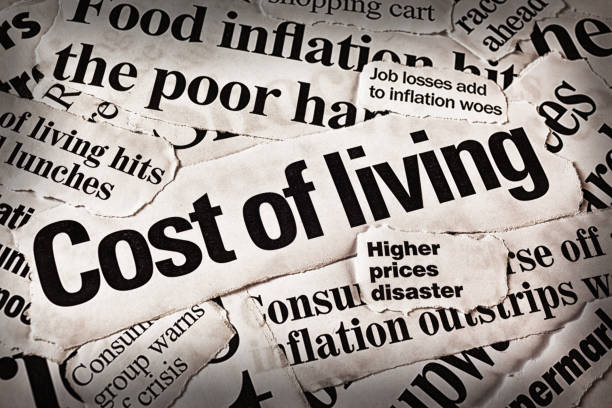
Australian real estate is often considered a resilient and “safe” investment due to many years of proven performance. Living in Australia, it’s easy to feel far removed from the current global conflicts but the reality is, in the face of global turmoil the international forces will impact and put pressure on our local property markets. We need to look closely and understand how we will likely be impacted to ensure we make informed decision when it comes to our property investments.
When global conflicts are tied to domestic forces like energy, inflation, and interest rates—we start to recognise that we are really not so far removed from the conflict on the other side of the world, and that this can play a powerful role in shaping local demand, supply, and even local market property prices.
This current conflict involving Iran is a pertinent example. While geographically distant from Australia, its economic ripple effects are anything but remote. We are already witnessing rising oil prices, inflationary pressure, and tightening monetary policy, and we will see the local responses starting to reshape the Australian property landscape in the short and medium term. However, for savvy buyers who understand risk and potential, they may be able to grab hold of a unique opportunity as we enter a period where we could experience some of the most advantageous buying conditions in some markets.
The Impact of Oil, Inflation, and Economic Pressure on Household Budgets
At the centre of the economic impact is energy. Iran is a significant player in global oil dynamics, and any instability in the region tends to drive uncertainty in supply chains. Even the perception of disruption can send oil prices higher, as markets price in risk.
We have already seen rising petrol costs and for Australian households, this is one of the most visible and immediate financial pressures that is unavoidable and hurts the most for regional communities.
But the impact does not stop at the petrol pump.
Higher fuel costs increase transportation expenses across the entire supply chain as road logistics are the main source to transport food and critical supplies across our country. This filters down to households with elevated costs for groceries, consumer goods, and everyday essentials. Businesses pass on these costs where possible, embedding inflation deeper into the economy. The result is a broad-based increase in the cost of living for all Australians.
With the cost of essentials rises, household disposable income begins to diminish. Families find themselves allocating more of their income to non-discretionary expenses with fuel, food, and utilities the priority. This means there is less capacity to spend on non-essentials as well as for saving up a house deposit, investing, or renovating which will have a direct effect on property demand.
Potential buyers may delay purchasing decisions, either due to reduced borrowing capacity or they want to take extra caution due to the global uncertainty. First-home buyers can be squeezed out of the market as their ability to save for a deposit diminishes. At the same time, existing homeowners may become more conservative, choosing to stay put in their house rather than upgrade.
This softening in demand is a key mechanism through which global events begin to influence local property prices.
The Impact of Inflation and Interest Rates
Inflation is the critical bridge between geopolitical conflict and local property market conditions. As inflation rises the Reserve Bank of Australia is typically compelled to respond by increasing interest rates to halt rising inflation. This is done to reduce spending, cool the economy, and bring inflation back within target ranges.
However, higher interest rates come with significant implications for the property markets:
• Borrowing capacity declines as lenders apply higher assessment rates.
• Mortgage repayments increase for variable-rate borrowers.
• Investor yields may be squeezed if rents do not rise at the same pace.
• Sentiment weakens as affordability becomes a central concern.
This combination tends to reduce buyer competition, which in turn places downward pressure on property prices or at the very least, slows growth.
However, any decline in property prices will be soften with a large blow to the housing supply dynamics. With the cost of construction and building materials rising, we expect the supply of new properties to also decline in an economy that is already struggling to meet housing demand.
While demand may soften, supply dynamics in Australia remain structurally constrained. Construction costs already elevated due to labour shortages and material price increases are further impacted by global inflationary pressures. Builders face tighter margins, project delays, and in some cases, insolvency risks. This reduces the pipeline of new housing supply. At the same time, population growth continues to place upward pressure on housing demand, particularly in major cities.
Although the demand for properties in some markets may weaken in the short term due to affordability constraints, the underlying need for housing remains strong. This is a key underlying factor that will prevent Australian property markets crashing.
Which Property Types Are Most Impacted?
Not all properties respond equally to these conditions. The impact tends to vary depending on price point, location, and buyer demographics:
Entry-Level and First-Home Buyers
These types of properties are often the most sensitive to interest rate changes. As borrowing capacity tightens, many first-home buyers are forced to step back, reducing demand in this segment.
Outer Suburban and Car-Dependent Locations
With petrol prices rising, areas that require long commutes can become less attractive. Buyers may prioritise proximity to employment hubs, public transport, and amenities. Many families
may decide to ditch the second car so demand will rise for properties that are within walking proximity to schools, transport, and supermarkets.
New Builds and House-and-Land Packages
Construction cost increases can push prices higher, but buyer demand may not keep pace due to affordability constraints. This can create a mismatch that slows sales activity.
Premium and Luxury Property
Interestingly, high-end markets are often less impacted. Buyers in this segment are typically less sensitive to interest rates and cost-of-living pressures, leading to greater resilience. High net worth individuals are more likely to be mortgage-free so are not impacted by interest rate rises.
Investment-Grade Assets in Prime Locations
Well-located properties with strong fundamentals—proximity to infrastructure, employment, and lifestyle amenities—tend to hold value better and recover more quickly.
Will This Be a Buyer’s Market?
When demand weakens and supply remains constrained but steady, a shift in market dynamics begins to occur. Buyers gain leverage and have the upper hand in negotiations.
Properties may stay on the market longer, vendors become more negotiable, and pricing expectations adjust. This environment is commonly referred to as a “buyer’s market”, where conditions favour those looking to purchase rather than sell.
If you’re looking to buy a home, this can provide an opportunity to secure a property with less competition.
If you’re an investor, this period can be advantageous if you look at the market dynamics with a strategic viewpoint.
Opportunities for Investors
Periods of economic uncertainty often deter most market participants. Yet historically, these are the very conditions under which long-term wealth is built.
When demand decreases:
• Competition reduces.
• Prices stabilise or soften.
• Buyer’s negotiation power increases.
• Off-market opportunities become more accessible.
Investors who are well-prepared, financially, and strategically, can acquire high-quality properties at more favourable price points.
Long-term investors will realise, that the property markets move in cycles. What appears uncertain in the short term often sets the foundation for the long-term capital growth with those who purchase investments during the downturn being positioned ahead of the curve.
The Resilience of Australia’s Property Markets
Despite global uncertainty, Australia’s economic and property market fundamentals remain robust.
Several key factors underpin this resilience:
Population Growth
Australia continues to experience strong migration, which directly supports housing demand.
Limited Housing Supply
Chronic undersupply of housing, particularly in major cities, creates a structural imbalance that supports prices over the long term. Any reduction in demand for property due to interest rate rises or uncertainty, is cushioned by the underlying shortage of supply.
Strong Banking System
Australia’s lending framework is conservative by global standards, reducing the likelihood of widespread defaults.
Employment Stability
While economic conditions may fluctuate, employment levels have remained relatively resilient, supporting household income.
Cultural Preference for Property Ownership
Property remains a cornerstone of wealth creation in Australia, reinforcing long-term demand.
The Strategic Perspective: Timing the Market vs Time in the Market
It is often said that “time in the market” is more important than “timing the market.” While this holds true over the long term, there is also merit in recognising cyclical opportunities. Periods shaped by geopolitical uncertainty, rising inflation, and interest rate increases tend to suppress demand. This creates entry points that are not available during periods of strong growth. Investors who understand these cycles and act with discipline rather than emotion are typically the ones who benefit most.
In the short term, the impact is clear: reduced demand, affordability constraints, and increased caution among buyers, but within this environment lies a window of opportunity.
Australia’s strong economic fundamentals provide confidence that, while cycles will continue, the long-term trajectory of the property market remains positive.
For those willing to act when others hesitate, this period may well represent not a setback but a strategic advantage if you’re willing to leap into it.

